What acceptance really means | Balance Health Hong Kong
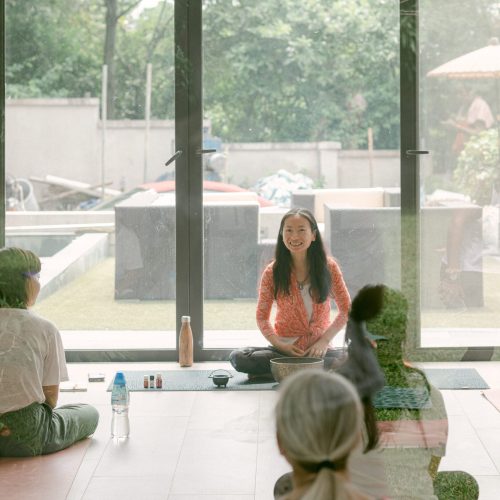
Step inside The Inner Space, a group healing sanctuary in Central, Hong Kong. Discover the story and design behind Balance Health’s home for inner work.


Recently, we have entered the peak season for influenza, and I believe many of you may have been affected. I’d like to take this opportunity to share with you how Traditional Chinese Medicine (TCM) understands the concept of “being sick.” I used to be someone who resisted illness fiercely; every time I caught a cold, I would inevitably break down in tears, accompanied by a lot of self-criticism: “I’ve been so careful, how did I get sick again? Oh no, this is going to affect my work!” The discomfort of a stuffy nose and a sore throat was really unbearable, and I often thought, “Why is my body being so uncooperative?” Perhaps some of you can relate to these feelings of frustration when it comes to being unwell. I hope this newsletter can provide you with some new insights.
Have you ever paid attention to how you get sick?
In TCM, the occurrence of illness is attributed to various pathogenic factors affecting the body, leading to an imbalance of yin and yang and dysfunction of the organs. The causes of illness can be categorized into 3 types: external causes, internal causes, and non-internal/external causes.
External Causes refer to the “six excesses” from the environment: wind, cold, heat, dampness, dryness, and fire. If the body cannot adapt to drastic changes in climate, it may lead to illness.
Internal Causes pertain to emotional factors related to the seven emotions (joy, anger, worry, thoughtfulness, sadness, fear, and shock), as well as dietary imbalances and excessive fatigue. These factors can disrupt the functions of the organs and the flow of qi and blood. For instance, excessive worry can harm the spleen and stomach, leading to symptoms like bloating and loss of appetite.
Non-internal/external Causes include injuries, poisoning, parasites, and other pathogenic factors.
You might wonder: Do these causes mean that one will definitely get sick? Not necessarily. Another key factor is the relationship between righteousness (zheng) and evil (xie).
When righteous qi is weak, illness may arise. Conversely, strong righteous qi helps the body recover.

In TCM’s classic text Huangdi Neijing, enhancing righteous qi involves “tranquility and emptiness,” meaning a calm and desire-free mindset harmonizes qi in the body. This keeps the spirit centered and helps prevent illness.
Does this sound hard to grasp? Let me share my experience.
The most important aspect of enhancing righteous qi is: not resisting but fully allowing illness to occur.
Take a moment to reflect. As living organisms, we are just like plants and animals—we all get sick. Illness is a natural process, not something you caused. There’s no need for self-blame.
Being sick is an opportunity for your body to reorganize itself. It’s how your body communicates that something isn’t right. Acceptance and non-resistance mean giving your body space without judgment and listening to its signals.
This doesn’t mean doing nothing or giving up on treatment. When you let go of the fighting mentality, you create distance between yourself and your pain. You’ll also become more aware of actions that help your body recover—this is the power of righteous qi.
Whether you’re currently in pain or not, let’s remind ourselves:
“I am willing to spend a little time each day quietly listening to what my body wants to tell me.
I can allow myself to be sick just as I allow myself to be healthy.”
And remember to keep breathing!


Step inside The Inner Space, a group healing sanctuary in Central, Hong Kong. Discover the story and design behind Balance Health’s home for inner work.

Step inside The Inner Space, a group healing sanctuary in Central, Hong Kong. Discover the story and design behind Balance Health’s home for inner work.

Step inside The Inner Space, a group healing sanctuary in Central, Hong Kong. Discover the story and design behind Balance Health’s home for inner work.

Step inside The Inner Space, a group healing sanctuary in Central, Hong Kong. Discover the story and design behind Balance Health’s home for inner work.